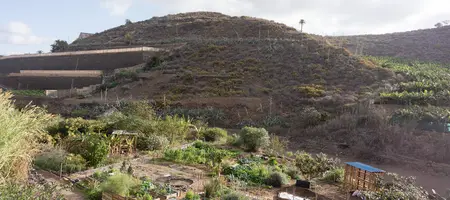


When we (here meaning us in the LINK project) set up the Peripheral LINKs Convergence, the idea wasn’t to build a fancy event with famous speakers. It was about opening a space and seeing what happens when people working on regeneration, community projects and sustainability education come together.
Watch the recordings on Youtube!
Looking back now, and reading through the feedback our participants gave, it feels quite clear that something meaningful did happen. There was a lot of learning within the sessions, and on the metalevel.
Generally people appreciated the range of topics, the depth in some of the conversations, and the feeling that this wasn’t abstract talk but something connected to real work and real situations. There was a sense of relevance, and momentum. That’s amazing, and something we feel genuinely proud to have co-designed.
At the same time, there was a huge disappointment for us, which became apparent already in the first few days. A lot of people registered, but didn’t actually attend any of the sessions.
The reasons given in the feedback are simple and understandable: work, family, tiredness, too many things happening at once. Not a lack of interest, but more a lack of capacity. There also seems to be a general lack of understanding what it means to sign up for something, and just not show up.
That’s probably one of the more important learnings from the meta-level of creating the Convergence. Just because people care doesn’t mean they will show up at a specific time, in a specific format, and be fully present. We tend to design events as if signing up equals participation, but that’s clearly not the case anymore. Especially online.
We had around 100 sign-ups, but only about 30 individual people showed up in the sessions throughout the week.
Can you imagine? We had designed workshops for 20-40 people, and then when five came, we had to change things up on the fly. It was difficult, and once we noticed this was how it would be, also detrimental to the mindset. We had hoped to reach many more people. It felt a bit like inviting a big group to your birthday and only two people come. Frustrating, embarassing even.
Should we have known 70% of the sign-ups were going to be no-shows? I don't see how it would have been possible to know. For us, it felt more like a reflection of something bigger - another sign of how the fear of missing out, overcommitting and "busybusyness" (like I call cramming our lives too full) is really ruining a lot of the good things and the real connections we could have! How to combat that? That is really the question, isn't it.
What else did we learn?
The event was completely online, and we had different kinds and lengths of sessions. Some of the sessions were quite interactive, which worked well for those who were ready to engage. But for others it created a barrier. Not everyone wanted or could to turn on their camera, speak in a group, or jump into breakout rooms. We also didn’t always communicate clearly what kind of participation was expected. That mismatch might seem small, but in practice it makes a real difference. It can be the reason someone stays or quietly leaves.
There was also something interesting around the structure of the programme. On one hand, people liked the variety. There was always something happening, different angles, different people. But that also made it harder to follow a thread. If you drop into one session here and another one there, it becomes fragmented. You get glimpses, but not necessarily a coherent experience. And that raises a question we’re still sitting with: is it better to offer many entry points, or to create a stronger shared journey?
This is also a communication issue. The programme was largely created from within the Peripheral LINKs network. From the inside, it made sense. From the outside, it could easily look a bit scattered. That’s a familiar lesson: even when you try to communicate clearly, there are always blind spots and there’s always room to do it better next time.
On a practical level, there were also small but important things. People didn’t always know about sessions in time, forgot about them, or couldn’t easily find their way back in. This is less about “promotion” and more about rhythm. How do you create something that people can realistically follow and return to, even when their days are full?
One thing that comes through quite strongly in the feedback and which explains many of the no-shows is that many people are operating close to their limits. There’s interest, there’s motivation, but also exhaustion. That doesn’t mean people don’t want to connect, actually quite the opposite. But the conditions under which they can do so are different from what we might assume when we design these kinds of spaces.
Conclusion
So in the end, the convergence wasn’t perfect, but it wasn’t meant to be. It was meant to test our limits and learning. And it did. It felt like a snapshot of how people are currently able to engage, connect and learn across different places and contexts.
For us, the main shift is this: we need to think more about how to create conditions that people can realistically step into, and not so much about creating big, impactful events. Less about filling a programme, more about making it possible to participate in different ways, at different levels, depending on where people are at.
That feels like something worth continuing.